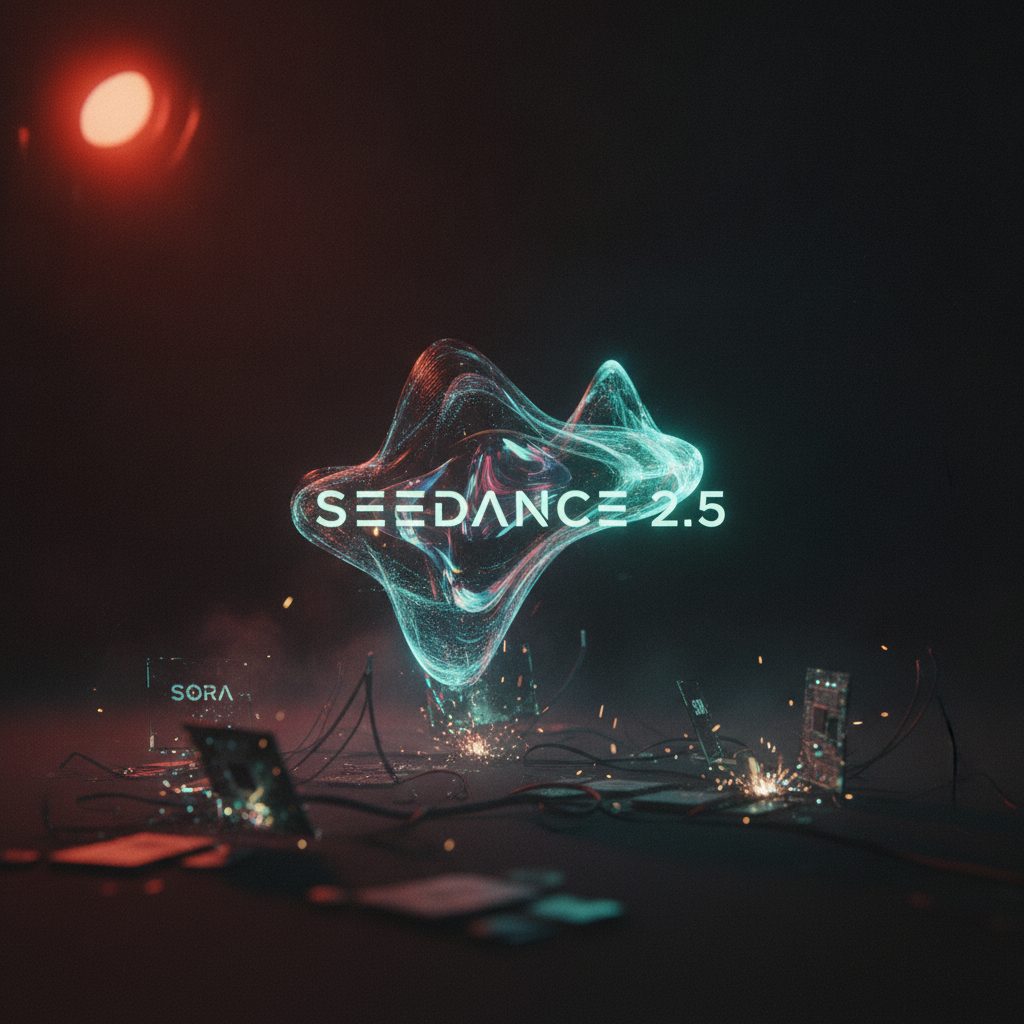
Fifteen million dollars a day. That's what Sora was reportedly burning in compute against $2.1 million in total lifetime revenue. Those numbers explain a lot about why attention has shifted so hard toward ByteDance, Kling, and Google this year. The API shuts down September 24. The app already died in April. It's not a huge surprise. Most people moved on months ago, and this week gave a few solid reasons why.
Seedance 2.5
ByteDance announced Seedance 2.5 at FORCE in late June, and the API lands on BytePlus on July 16. The feature list addresses most of the standing complaints about video generation over the last year.
Native 30-second generation in a single pass is the headline. No stitching, no visible seams from clips glued together out of four-second chunks, and no motion hiccups at the join points. Anyone who has had to hide a stitch point in a client edit under deadline will recognize what that's worth.
The more useful feature is semantic local editing. Right now, if a client watches a take and says the jacket's wrong but everything else is fine, the standard move is to regenerate the whole clip and hope the rest holds together. Seedance 2.5 allows changing just the jacket, or just the background, or one prop, while leaving everything else locked. That's the difference between a one-hour turnaround and a one-day turnaround on set-adjacent work.
There's also a jump in reference input: 50 assets at once, up from 12 in Seedance 2.0. The previz tool stands out most. ByteDance fed the model an untextured spaceship mesh, around 100,000 polygons, gave it a material reference, and pushed the camera in slowly. The outline held. The proportions held. The structure didn't melt or wobble under camera movement, which is the usual failure point for these tools. Feed it a white-model blockout plus a style reference and it renders something close to final frame. For game cinematics and ad previz, that moves up how early a rough version can look presentable enough to show a client.
Seedance 2.0 also quietly got bumped to native 4K while everyone waits for 2.5 to fully roll out. If 4K output is needed today, there's no reason to wait on the new version.
Google's two-model day
On July 1st, Google released Nano Banana 2 Lite and Gemini Omni Flash within hours of each other. Nano Banana 2 Lite generates images in about four seconds and costs $0.034 per 1,000 images. Pricing that makes high-volume ad variant work close to free to iterate on. The full Nano Banana Pro has been in regular use on client stills for months; Lite is clearly built for a different job: bulk generation, quick concept passes, the kind of work that would otherwise eat a junior designer's afternoon.
Gemini Omni Flash matters more for how it changes the editing process than for its specs. It's a video model priced at $0.10 per second, the same as Veo 3.1 Fast, but the editing interface is conversational. Instead of scrubbing a timeline and keyframing an edit point, changes get described in plain language. "make the sky overcast," or "have her turn to camera two seconds later". Applied directly to the clip as a text instruction. How well that holds up on complex multi-element scenes is still an open question. But for small, specific client-facing revisions, it could cut out a round-trip through a traditional edit entirely.
Kling v3 and Higgsfield
Kling v3 now sits at the top of the video Arena leaderboard, ahead of Happy Horse 1.0 and Seedance 2.0 Fast, based on blind votes across text-to-video, image-to-video, and editing tasks. Blind votes carry more weight than benchmark charts published by the labs themselves. Kling's Voice Binding feature is also worth a look for multi-shot sequences. It locks a character's voice across up to six cuts and five languages, addressing the drift that shows up when a voice subtly shifts shot to shot in a narrative sequence.
Higgsfield remains the more practical daily tool, mainly because it avoids managing a dozen separate subscriptions and login tabs. It aggregates most of these models under one roof and adds Cinema Studio for camera moves, Soul ID for character locking, and a LipSync tool that cuts down on revision calls. One habit worth adopting: train a Soul ID on the hero character early, before generating any shots, and reuse that identity across every model in the stack, not just Higgsfield's native ones. It's a reliable fix for face and voice drift across a multi-shot sequence and takes about ten minutes to set up.
None of this makes the job easier in the way people outside the industry tend to assume. It makes the job faster, and it still rewards people who know how to direct a shot. The model just listens better now when told what that means.