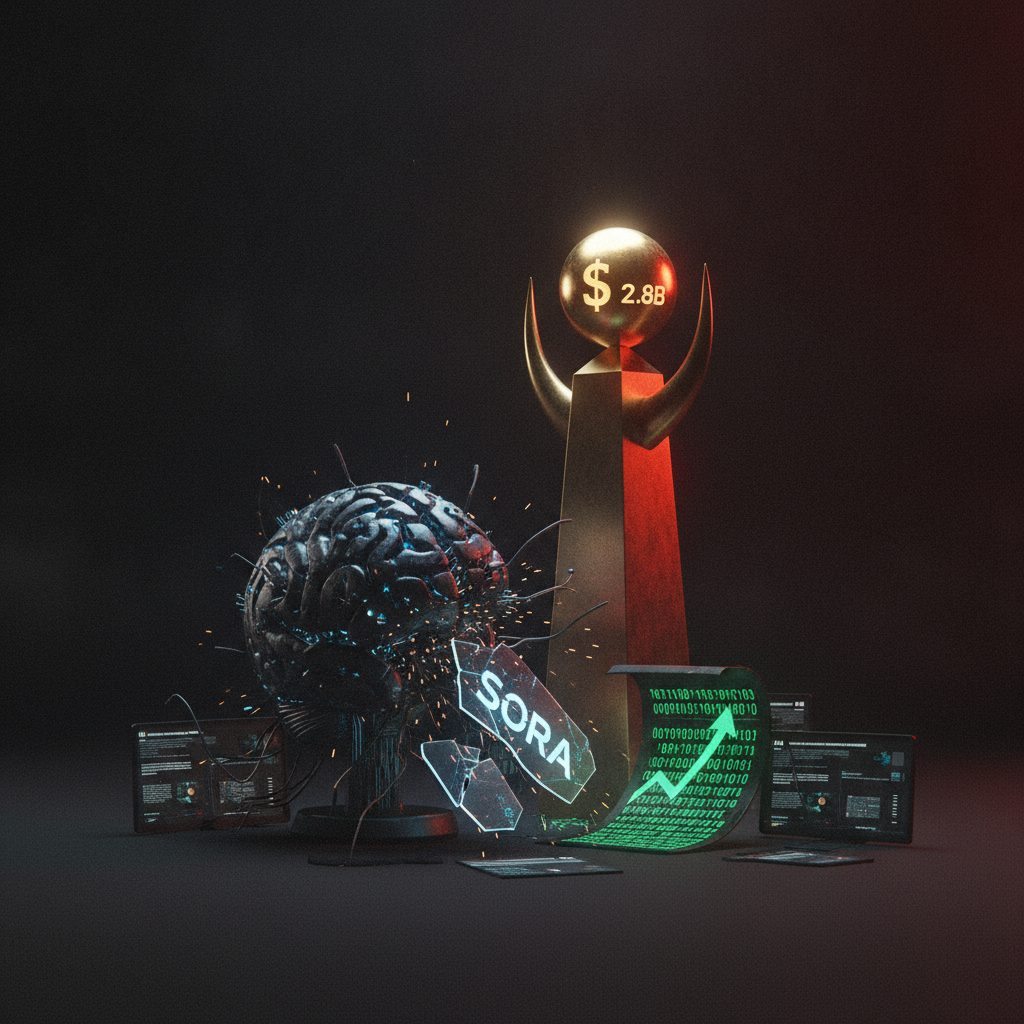
Disney gave OpenAI a billion dollars and found out Sora was getting shut down less than an hour before the rest of us did. One side didn't even get a heads-up call, let alone a say in the decision. Meanwhile in Hangzhou, Kling just closed a $2.8 billion round with Alibaba, Baidu, and Tencent all writing checks into the same company, which would have been unthinkable three years ago given how those three feel about each other. One model dies, another gets crowned the most valuable video AI company on earth, in the same week. That's where we are on July 11, 2026.
I've been cutting client work on Kling, Seedance, Veo, and Runway pretty much daily since last year. The whiplash of this week isn't abstract to me. It changes which tool I open first tomorrow morning.
Sora's death was slower and cheaper-looking than it should have been
The official timeline is almost bureaucratic in how anticlimactic it reads. Web and app access ended back in April. The API goes dark September 24. No fanfare, no public reckoning, just a staged wind-down. But the number that actually explains what happened is this: Sora peaked at around a million users and then cratered to under 500,000, all while burning roughly a million dollars a day just to keep the lights on. It didn't fail to find an audience. It found one, watched it leave, and kept spending as if nobody had noticed the exodus.
I used Sora early on for a couple of concept passes on a Web3 summit teaser last year. It was fun for about two weeks, then the outputs started feeling samey and the moderation felt heavier than the competition's. I moved projects to Kling and never really moved back. Turns out I wasn't alone.
The real story isn't OpenAI's exit. It's who's rushing into the space it left behind. Kling, Seedance, and Shengshu are all explicitly hunting for the global, professional-filmmaker dollars that Sora used to have a claim on. Kling closing a $2.8 billion round at a $15 billion valuation, with a Hong Kong IPO reportedly coming within the year, tells you this isn't a hobby project anymore. This is a company positioning itself as infrastructure for the next decade of professional video production, and the money backing it isn't the kind that gets bet casually.
Everyone's building longer, and Meta just showed up late
Seedance 2.5 landed this month with native 30-second generation, 4K output, and up to 50 multimodal references. For anyone doing actual client work, the 30-second number matters more than the resolution specs. Native, coherent generation means fewer stitched clips, fewer visible seams where a character's shirt changes color between cuts. I've had to manage that seam problem manually for a year now on brand campaigns where the client notices everything. If Seedance 2.5 holds up to real testing, that's hours saved per deliverable, not minutes.
Meta, for its part, showed up to the video fight without actually showing up. Muse Image launched this week, free inside the Meta AI app, Instagram, and WhatsApp, built by Meta Superintelligence Labs under the internal codename Mango. Muse Video is "in development," which usually means it wasn't ready but they needed a headline anyway. The feature getting attention right now isn't the generator itself. It's that Muse lets you manipulate another public Instagram user's images with AI. That's a feature that will age badly the first time it makes a bad headline instead of a product-meeting slide. I'd bet money this gets walked back or heavily gated before Muse Video ever ships.
Runway isn't playing the volume game at all. Gen-4.5 is still the model I reach for when a client needs something that has to look expensive, because it does. At 25 credits per second it's not cheap, and it's Runway-exclusive, but for anything quality-critical it remains the strongest single model out there in mid-2026. Runway's also running its fourth annual AI Film Festival right now, screening finalists in New York and LA. The one part of this industry still organized around actual films rather than API pricing tiers.
The actual workflow fix nobody's marketing loudly enough
Higgsfield's Soul ID has changed my day-to-day more than any single model release this year. Character consistency across models used to mean re-uploading reference images every session, on every platform, and praying the face didn't drift halfway through a shoot. Soul ID trains a persistent identity from 20-plus reference photos in a few minutes. From then on that identity works automatically across Seedance 2.0, Kling 3.0, WAN 2.6, Veo 3.1, and Gemini Omni Flash. No re-uploading, no manual matching.
Concrete workflow I'd actually recommend trying this week if you're building an AI avatar or brand ambassador:
- Generate a clean reference image with Higgsfield Soul, then feed both that image and a real headshot into OpenArt's Flux Context model as Omni references, so you get creative styling fused with actual facial features.
- Run the voice through ElevenLabs using the Alpha v3 model. It handles emotional range noticeably better than earlier versions.
- Animate the final result in HeyGen's Avatar 4.
I've stacked versions of this pipeline for two client projects now, and the consistency across shots is the part that used to eat an entire afternoon of manual correction. Now it doesn't.
What strikes me most about this week isn't any single model. It's that the entire market reshuffled itself around one company's exit in about five months flat. Sora didn't get out-competed slowly. It got replaced by three companies simultaneously while its biggest partner found out over a press release. Whatever platform you depend on today, don't assume it's still answering emails by September.